
Start Early to Build Future Engineers: Notes from the St. John’s Catholic Prep Career Fair

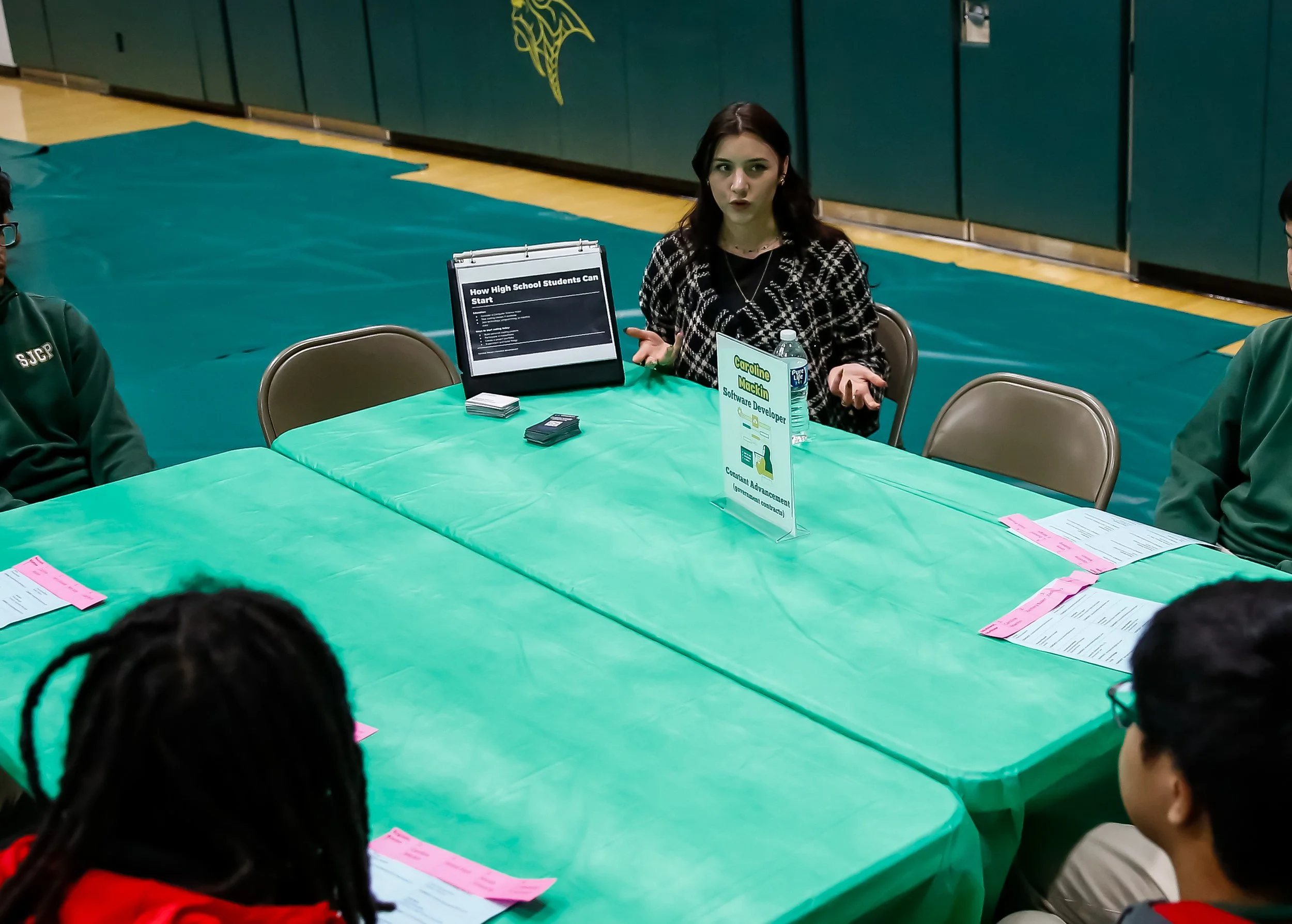
For many students, software engineering is still an abstract concept—they know it exists, but not what it looks like in practice or how to get started. We addressed that head-on last week when our Junior Developer Manager, Caroline Mackin, returned to her former high school to meet students and talk about careers in software engineering and what it means to build technology that matters. We strongly believe that exposure early matters.
Caroline’s message was straightforward: software is everywhere, and the path into it is more accessible than it might seem. Software engineers are not just writing code; they are building systems that power everything from mobile applications to cybersecurity tools and critical infrastructure. That realization changes how students think about the field—it becomes less about learning a language and more about solving real problems.
Why this outreach supports our mission
At Constant Advancement, we spend a lot of time thinking about how strong engineers are developed. That process does not start on someone’s first day of work. It starts much earlier, with exposure, mentorship, and a clear understanding of what the field actually looks like. That is why moments like this matter.
Our work focuses on building secure, advanced systems that support government and national security missions. It is work that depends on thoughtful, disciplined engineers who care about impact as much as technology. Those qualities are not developed overnight; they are built over time, often beginning with a single moment of exposure like this one. When students start to see what is possible and how they might contribute, the path becomes more tangible. Early career development is not a separate initiative for us—it is part of how strong teams are built and how future engineers begin to find their footing.
Making the work tangible for students
One of the most valuable parts of the conversation was walking through what a day in the life actually looks like. For students, this kind of clarity replaces assumptions with something real and underscores a core truth: software engineering is not an individual activity. It is a team discipline built on communication, iteration, and shared responsibility.
Designing systems
Collaborating with teammates
Writing and reviewing code
Testing and improving what has already been built
How engineers actually get started
There is often a misconception that there is a single, defined path into software engineering. Caroline’s story challenges that. Her own introduction to development began with coding classes in high school and participation in hackathons.
The advice she shared with students was practical:
Build things.
Stay curious.
Be willing to experiment.
Students do not need perfect conditions to begin. They need opportunities to try, fail, and improve. That mindset is what carries forward into a career.

Looking ahead
Investing in early career development is part of building strong teams. The engineers who will solve tomorrow’s problems are still learning what is possible today. Helping them see that path clearly is one of the most valuable things we can do. Early steps add up. Whether you start by experimenting with a small project or joining a short workshop, you are building momentum toward a meaningful future in software and mission-driven technology.
